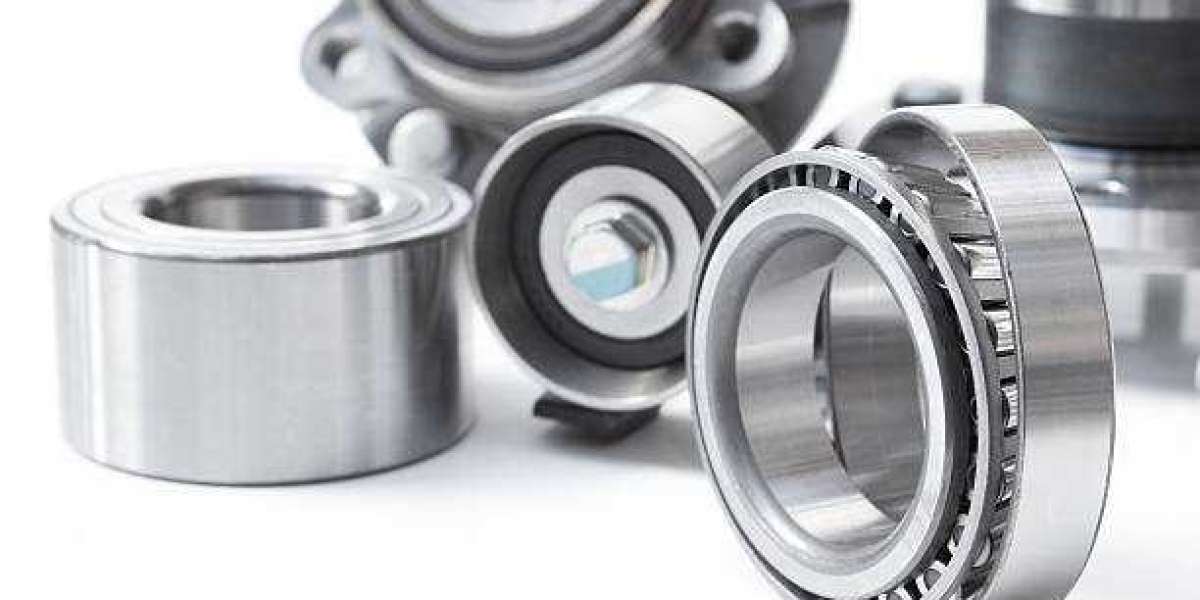

The global Roller Bearings Market continues to serve as a backbone of the industrial components ecosystem, supporting efficient motion control and load management across a broad range of applications. Roller bearings are essential in minimizing friction, improving rotational accuracy, and enhancing the operational life of machinery. In 2025, the market is valued at USD 20.0 billion and is projected to reach USD 28.6 billion by 2033, expanding at a CAGR of 4.8% during the forecast period. This consistent growth reflects expanding industrial automation, rising vehicle production, and ongoing infrastructure development worldwide.
The expanding scope of the Industrial Roller Bearings Market is largely driven by the modernization of manufacturing facilities and the integration of high-performance mechanical systems. Industrial equipment requires bearings capable of handling significant radial and axial loads without compromising durability. As factories move toward smart production environments, bearings must deliver greater precision, heat resistance, and load-bearing efficiency. Advanced lubrication technologies and improved material compositions are further strengthening product reliability in demanding operational conditions.
The automotive sector plays a critical role in shaping the Automotive Roller Bearings Industry. With the rapid shift toward electric mobility and hybrid systems, vehicle components are undergoing technological upgrades. Electric drivetrains demand bearings that can withstand higher rotational speeds while maintaining low friction and reduced noise levels. Additionally, commercial vehicles and heavy-duty transportation systems require high-capacity bearings to perform under continuous stress and heavy loads. These evolving requirements are encouraging manufacturers to focus on innovation, lightweight materials, and optimized structural design.
Technological transformation is redefining the landscape of the Global Roller Bearings Industry. The growing adoption of sensor-integrated and condition-monitoring systems has strengthened the relevance of the Global Roller Bearings Industry in predictive maintenance frameworks. Smart bearings capable of transmitting vibration and temperature data allow operators to identify potential failures before they occur. This development reduces downtime, lowers maintenance costs, and enhances operational efficiency across industries such as aerospace, energy, and heavy equipment manufacturing.
The Heavy-Duty Roller Bearings Market is also gaining momentum due to increasing infrastructure investments and renewable energy projects. Wind turbines, construction equipment, mining machinery, and large industrial compressors depend on durable bearing systems to function efficiently under extreme pressure and environmental conditions. As renewable energy installations expand globally, the need for long-lasting and high-load-capacity roller bearings is expected to rise steadily. Aerospace and defense applications further contribute to demand, as aircraft engines and landing gear systems require precision-engineered bearing solutions capable of handling intense operational stress.
Regionally, Asia-Pacific dominates the global landscape, supported by strong automotive manufacturing bases, expanding industrial output, and infrastructure development initiatives. North America and Europe maintain technological leadership in advanced bearing design and production processes. Emerging markets are also witnessing increased adoption of modern machinery, which strengthens long-term demand across developing economies. Supply chain diversification and localized production strategies are becoming key priorities to ensure consistent availability and reduce dependency risks.
Sustainability trends are influencing the Precision Roller Bearings Market as manufacturers explore recyclable materials, eco-friendly lubricants, and energy-efficient designs. Reduced friction directly contributes to lower energy consumption in mechanical systems, aligning with global sustainability goals. Continuous research and development investments are focused on enhancing product lifespan and reducing overall operational costs, ensuring long-term market stability.
Looking ahead, the roller bearings sector is poised for moderate but stable growth, supported by industrial automation, electrification of transport systems, and renewable energy expansion. As industries adopt smarter and more efficient machinery, the role of advanced bearing systems will become even more crucial in maintaining productivity and reliability across global operations.
Frequently Asked Questions
What is driving growth in the Roller Bearings Market?
Growth is driven by expanding automotive production, industrial automation, infrastructure development, and renewable energy projects that require durable and high-performance bearing systems.
How is the Automotive Roller Bearings Industry adapting to electric vehicles?
Electric vehicles demand high-speed, low-friction, and noise-reducing bearings. Manufacturers are developing precision-engineered products specifically designed to support electric drivetrains and hybrid systems.
Which sectors contribute significantly to the Industrial Roller Bearings Market?
Key contributing sectors include automotive manufacturing, heavy machinery, aerospace, renewable energy, mining, and construction equipment industries.
What opportunities exist in the Precision Roller Bearings Market?
Opportunities are emerging in smart bearing technologies, predictive maintenance systems, renewable energy installations, and advanced robotics applications where high accuracy and reliability are essential.